Mobile Automotive Service·Boston, United States
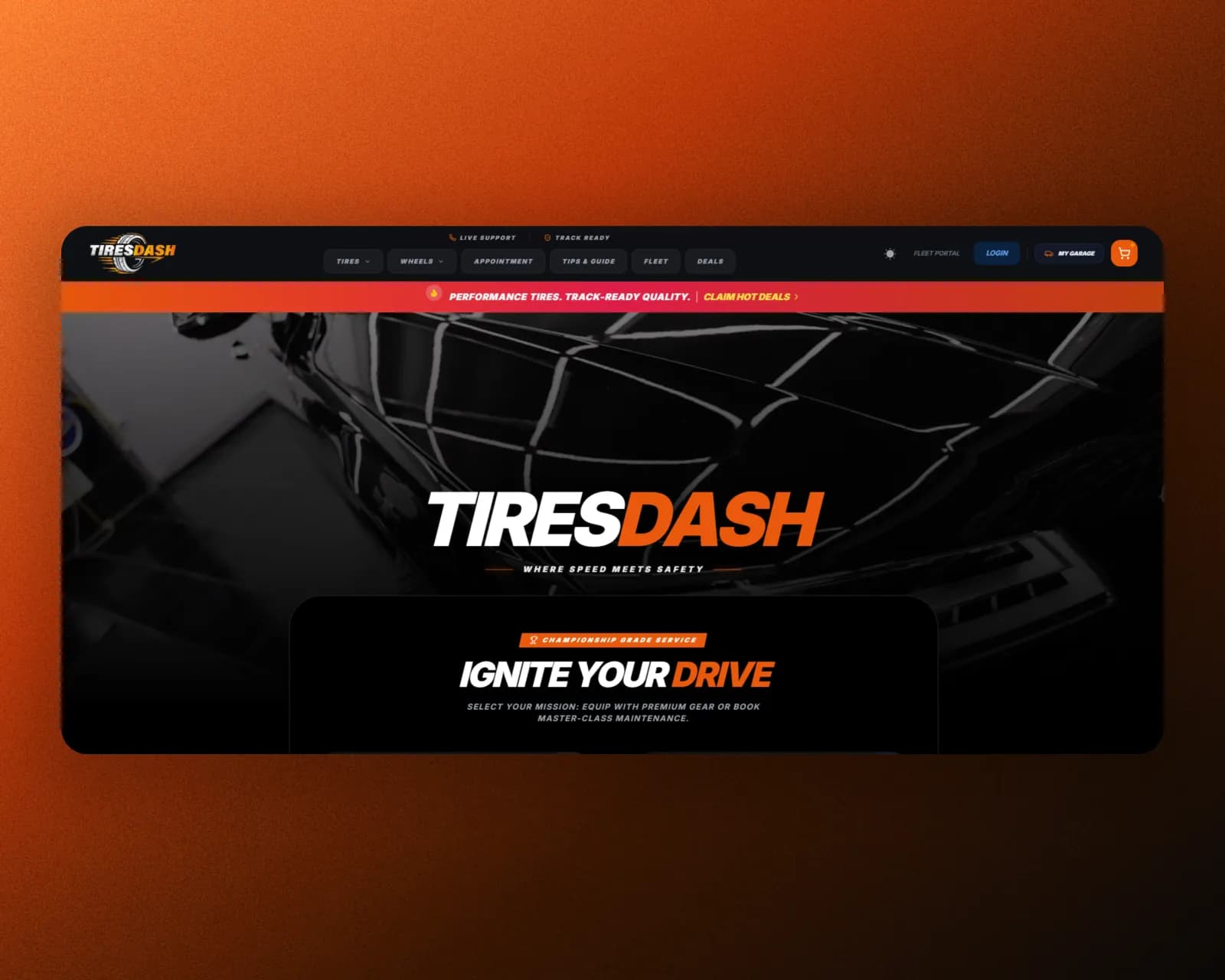
Migrating a Mobile Tire Service from WordPress to a Custom Next.js Platform
How I rebuilt a Boston mobile tire & wheel company's platform from WordPress to Next.js — custom booking, fleet management, and an operations-focused admin panel.
- Industry
- Mobile Automotive Service
- Client
- TiresDash
- Timeline
- Boston, United States
What changed
Before
After
Before
WordPress
After
Next.js
Before
Manual/plugin-based
After
Custom admin + fleet panel
Before
Plugin booking stack
After
Custom booking flow
The challenge
TiresDash runs a mobile tire and wheel service in Boston — technicians go to the customer, not the other way around. The business was running on WordPress, and it had outgrown what WordPress could reasonably support. The core issues:
- Database limitations — the data structure needed for tire/wheel inventory, fleet scheduling, and booking didn't map cleanly onto WordPress's content-first architecture
- Heavy custom feature requirements — the business needed functionality (fleet management, custom booking logic) that WordPress plugins couldn't handle without stacking fragile workarounds
- A fully custom admin panel — the team needed an operations dashboard built around how they actually work, not a generic WordPress admin retrofitted with plugins
- A dedicated fleet panel — tracking which technician/vehicle is assigned to which job, something no standard WordPress booking plugin was built for
- Mobile experience constraints — WordPress page-load overhead was a practical friction point for a mobile-service business where customers book on their phones, often on the spot
- An outdated booking and product system — the existing booking flow and product/service catalog needed a full rebuild, not a patch
My approach
- Full migration from WordPress to Next.js — rebuilt the platform on a modern stack designed around the business's actual operations, not a CMS's content model
- Custom admin panel — built specifically for how the TiresDash team manages inventory, scheduling, and jobs
- Fleet management panel — a dedicated interface to track technicians, vehicles, and job assignments
- Rebuilt booking and product system — a custom booking flow with an updated product/service structure
- Data migration via scraping — the existing WordPress data had to be extracted and restructured to fit the new system's data model, since a direct database port wasn't viable given the volume and structure of existing records
The outcome
The hardest part wasn't the new build — it was getting the existing data out of WordPress cleanly. With a large volume of records (inventory, service history, customer/job data) that didn't map directly onto the new schema, a simple export/import wasn't an option. I built a scraping-based extraction process to pull the data out of WordPress's structure and reshape it to fit the new Next.js/MongoDB system, while making sure nothing was lost or corrupted in the process — all while the custom features (fleet tracking, admin workflows) had to keep working correctly on the new platform from day one.